
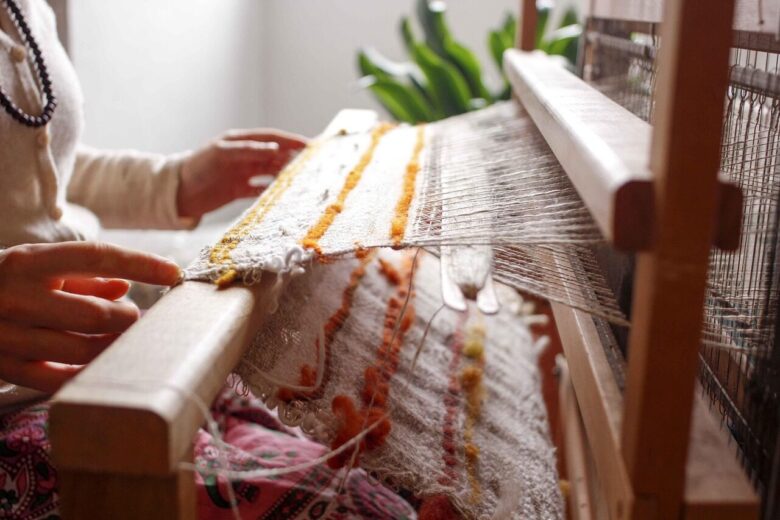
A simple loom can turn leftover yarn into coasters, wall hangings, mug rugs, bookmarks, and other useful pieces.
These easy loom weaving projects help beginners practice basic skills without requiring a floor loom, a dedicated studio, or advanced pattern knowledge. You can begin with a frame loom, lap loom, or homemade cardboard loom and build your skills one project at a time.
Starting with a small project makes it easier to practice even tension, straight edges, color changes, and secure finishing.
Beginner Loom Weaving Basics: Tools, Yarn, and Simple Project Ideas
For easy loom weaving at home, a small frame loom is a practical place to start. A beginner loom kit may include a shuttle, shed stick, weaving needle, and comb, reducing the need to purchase each tool separately. Check the contents before buying because kits vary.
Choose yarn according to the project as well as its color. Smooth cotton yarn can produce a firm, flat fabric for coasters and table mats, while wool, acrylic, roving, and fabric strips can add texture to decorative wall hangings. Medium-weight yarn is generally easier for beginners to see and control than very fine fibers.
- A blunt tapestry or weaving needle is useful for small frame-loom projects.
- A wooden comb, tapestry beater, or sturdy fork can help pack each row evenly.
- For a first project, choose a strong, low-stretch warp thread. Very elastic knitting yarn can make consistent tension more difficult.
A woven coaster or mug rug is a manageable first project: warp a small loom, weave plain rows, and secure the warp ends after removing the fabric. This introduces spacing, tension, edge control, and finishing without requiring a large piece.
If you want to compare supplies, check craft stores or online marketplaces for kits, handmade looms, and specialty yarn bundles. Look for clear instructions, enough warp thread for the included projects, and the basic finishing tools you will need. The handmade craft business checklist also covers planning considerations if you eventually want to sell finished work.
Step-by-Step Easy Loom Weaving Projects to Make at Home
A small frame or lap loom, low-stretch warp thread, project yarn, a blunt tapestry needle, and a weaving comb are enough for most of these beginner projects.
- Warp the loom evenly. The threads should feel firm and consistent, but not excessively tight.
- Add a bottom spacer. A strip of cardboard can leave room for tying or weaving in the warp ends later.
- Begin plain weave. Pass the weft over one warp thread and under the next, reversing the sequence on the following row.
- Leave room at the edges. Place the weft in a slight arc or leave a small loop before beating it down so the sides do not pull inward.
- Change colors as desired. Leave yarn tails long enough to weave securely into the back.
- Finish the piece. Remove it carefully from the loom and secure the warp ends with knots, fringe, or woven-in ends appropriate to the project.
Choose a project that matches the amount of finishing and assembly you want to do:
- Bookmark: One of the simplest options because it is narrow and uses only a small amount of yarn.
- Coaster or mug rug: A useful project for practicing square corners, even beating, and flat fabric.
- Mini wall hanging: A flexible decorative project that can include wool roving, cotton yarn, fringe, or recycled fabric strips.
- Small table mat: A larger beginner project that requires more attention to consistent tension and straight edges.
- Small pouch: An easy-to-intermediate project made by folding one woven rectangle or joining two panels, then sewing the sides securely.
For a striped wall hanging, switch yarn colors every few rows. For a softer transition, blend similar shades or alternate them over several rows. Avoid packing highly textured fibers so tightly that their texture disappears.
When the weaving is finished, remove or cut the warp as appropriate for the loom, secure the ends, and trim any fringe evenly. For gifts or items offered for sale, include the finished dimensions, fiber content when known, and care instructions based on the yarn label.
Common Loom Weaving Mistakes and How to Improve Your Finished Pieces
Uneven warp tension is a common cause of distorted weaving. If some warp threads are substantially tighter than others, a wall hanging, coaster, or table mat may pull to one side even when the pattern appears straight on the loom.
Before weaving, press each warp thread gently and adjust noticeably loose or tight areas. The warp should be firm enough to work against without feeling as tight as a guitar string. Excessive tension can strain the loom, make weaving more difficult, and contribute to curling.
- Edges pulling inward: Leave a small loop or arc of weft before beating each row into place.
- Wavy or uneven edges: Use a cardboard guide and check the width every few rows.
- Loose rows: Beat the yarn with consistent pressure instead of pushing hard in isolated spots.
- Bulky knots: When the project allows, weave yarn tails into the back rather than leaving visible knots.
- Gaps after color changes: Overlap or interlock adjacent yarns, then secure their tails on the back.
For example, pulling tightly at every turn can make the sides of a square coaster narrow toward the center. Allowing a little extra weft at each edge gives the yarn room to travel over and under the warp, helping the finished piece remain more even.
Finishing matters as much as weaving. After removing the piece from the loom, secure the warp ends, weave in loose tails, and trim the fringe. If the fabric needs reshaping, follow the yarn manufacturer’s care instructions. Pinning the piece into shape and allowing it to rest or air-dry is a gentle option; apply heat or steam only when the fiber’s care guidance permits it.
If you plan to sell finished pieces on a marketplace such as Etsy, prioritize consistent sizing, neat backs, secure ends, accurate material descriptions, and appropriate care instructions. Marketplace requirements can change, so check the platform’s current policies before creating a listing.
Key Takeaways
Simple loom weaving projects build foundational skills while producing pieces you can use, display, give as gifts, or develop into more advanced designs. Choose a project based on its size, the yarn you have available, and the amount of finishing or assembly involved.
- For a quick first project: Make a bookmark, coaster, mug rug, or mini wall hanging.
- For skill development: Add stripes, texture, color changes, or fringe.
- For a practical challenge: Try a table mat or small sewn pouch.
Keep the first project manageable, focus on even tension rather than perfection, and use each finished piece to identify the skill you want to practice next.
The WeaversRock Crafts Editorial Team researches, prepares, and reviews practical content about weaving, handmade crafts, creative home décor, beginner-friendly projects, and small craft businesses.
Our goal is to provide clear instructions, realistic ideas, useful comparisons, and responsible safety guidance for readers who enjoy creating by hand. Articles are reviewed for clarity, relevance, consistency, and obvious factual issues before publication.
We do not claim professional qualifications, personal testing, or first-hand experience unless those claims can be supported. Readers should always follow manufacturer instructions, use suitable tools, and take appropriate safety precautions when completing a project.